
Writing Collects #0
An introduction—at best and no more—to the collect as a form of poetry. The daily collect writing starts on Wednesday, so don't trip, chocolate chip, there will be time.

TL;DR WE EACH BEGIN WRITING A COLLECT A DAY STARTING WEDNESDAY, MARCH 4 (get it?)
I have been and continue to be overjoyed by the response this invitation to writing collects (pronounced /ˈkɒlɛkt/, KAHL-ekt) for a week has received. I am moved beyond belief. Thank you and thank you to us, the 18 brave souls who have come forward to embark on a quest for Mount Doom (hey! we can form two whole Fellowships!)! I am so very happily humbled to have found others who want, like me, to make an attempt at something if only just to say you made the attempt and now you know what is possible. I sing praises for the risk-takers, the try-havers, and the good-faith doers.
I’m also really not wanting this to feel in any way like teaching you and assigning you assessment upon assessment to measure your progress and report back. Though I know several of you from that schoolish starting line, we are freer here than in that game we once played. And I am just as confused as you are, which many of you alluded to in your tentative but courageous yes, yes, I think so, yes when I asked. That’s where magic is.
However, I do want this opportunity to be something we build together, like a co-created shrine sanctuary citadel refuge for peace amid the roiling, turbid din of un-peace. But I don’t need to tell you that, for that is why you have come, is it not, my old friend?

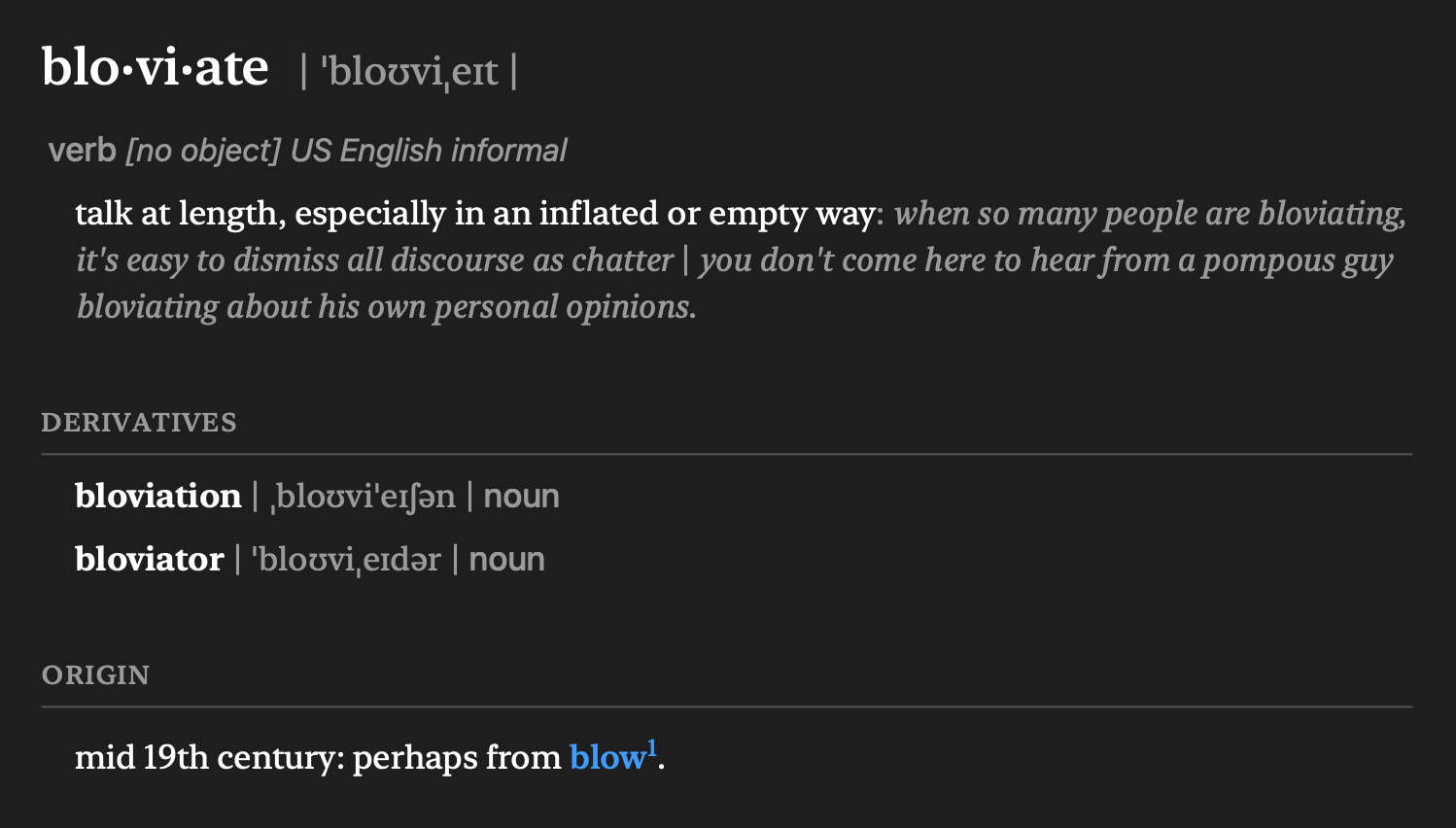
Okay. Onto the meat a potatoes of this whole bloviating1 preamble.
Q: Yes hallo, Andrew? Thanks for taking my call, yes, you mentioned what a collect is, but I don’t understand really what a collect is, so how am I supposed to write one if I am confused?
A: Right, fair play to you. Collects come from liturgical traditions (see: church activities) and are a kind of prayer-poem you’ll often hear near the beginning of Mass. So these are, in their quintessence, prayers, and prayers are askings (related to the French prier, “to ask”, which came to Middle English via Old French, hence our Modern English phrase, “Pray, tell me more about collects”), and that just means that the speaker of the poem, the voice that says “I” (which doesn’t have to be you, the writer), is asking for something.
Q: But if collects come from prayer and church culture, doesn’t that mean collects have to be religious in nature? Do I have to be religous in nature to write a collect? Are you religious in nature, Andrew?
A: Not at all, no, and no. But, like, in nature, yes. Secular collects are a thing, too. Atheists and theists alike write collects. For our purposes, think of the form like a template or structure you can use to build a poem (and for those of you who’ve taken a Poetics main lesson taught by Andrew Sullivan or Alison Davis, you may recall or even know very well poetic forms like ghazals and rondelets and sestinas and limericks). Long story short, you don’t need to address any kind of God in your collect. Just name someone or something you want to speak to.
Q: Okay, but how do I write a collect?
So the form and structure is the thing. According to this mystical Irish puppet, a collect has five folds:
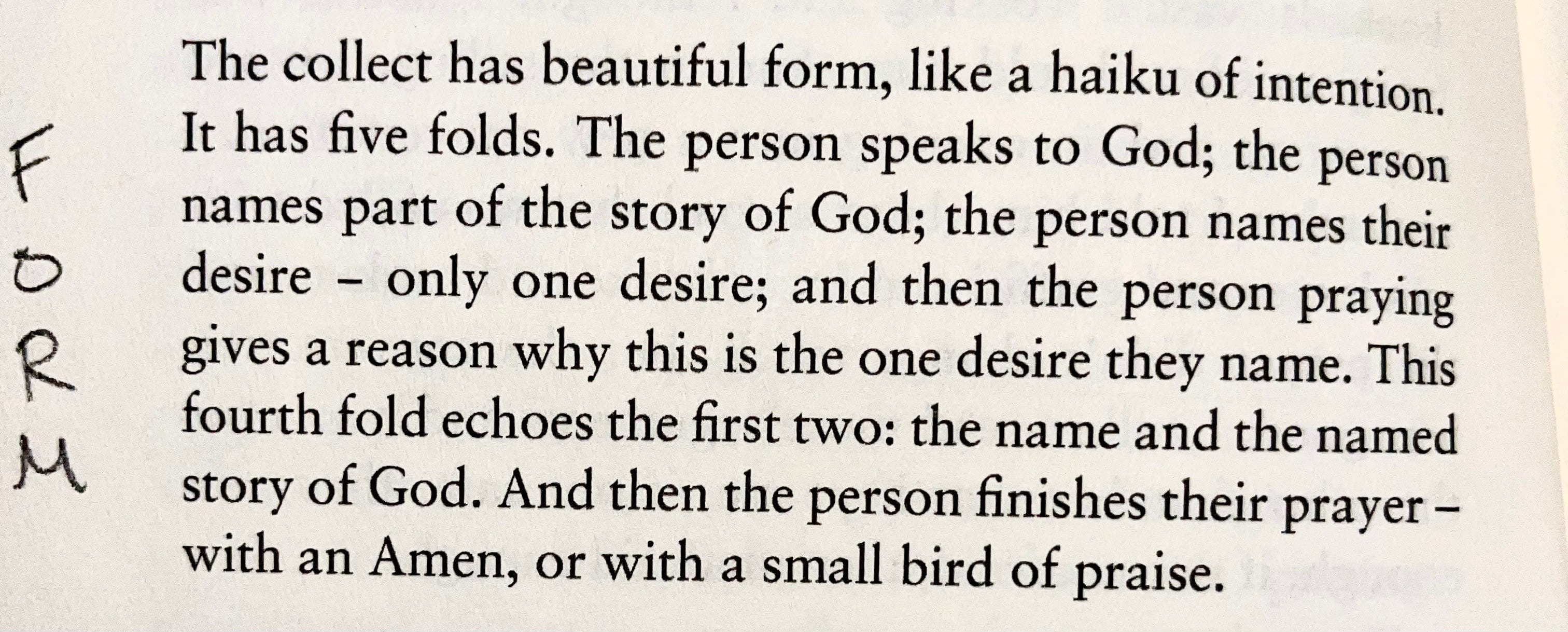
If “God” bums you out like He bums me out most days, substitute Him for another Word and go from there. Mary Karr—the beautifully irascible author of The Art of Memoir and the most stubborn, tough-as-nails Texan Catholic if I’ve ever met one—has recommended “Truth” instead of “God”, which I find useful in many instances.
Here’s another way to think of this five-fold structure2 (lads, I’m no genius, I’m literally pulling this from the Wiki page):
Invocation: name the God (or tree, or lover, or pencil) your collect will speak to.
EXAMPLES
a1. Goddess of the eternal mystery,
b1. Juniper reigning on this ridge,
c1. Lover of my sapphic tongue,
d1. My Yellow Ticonderoga of many lines,
Acknowledgement: give the one you are addressing some qualities related to your request. I like to start with the second-person pronoun, You.
EXAMPLES
a2. You who can craft and discern the Lens of Truth,
b2. You standing sentinel keeping vigil over us,
c2. You cunning linguist who speaks daggers to me,
d2. You trusty companion through sketchpads and standardized tests,
Petition: here is where you ask your ask, and, according to someone somewhere, the speaker asks "for one thing only and that in the tersest language". Have fun being terse.
EXAMPLES
a3. Set our hearts alight with power, wisdom, and courage
b3. Keep us safe amid these frozen peaks and gushing lakes
c3. Warm me with the embrace of your little death
d3. Guide me in my journey of articulation and truth
Aspiration: traditionally often beginning with “in order that”, here is where you say why you’re asking for what you’re asking for.
EXAMPLES
a4. In order that the Temple of Time remains opens for me in my quest
b4. In order that we may find rest, recovery, and companionship here in our camp
c4. So that when my time comes, the Earth itself is prepared to shatter with my shaking.
d4. So I can know what to say when I need to say it
Pleading: not a fan of this term for this part of the collect. Pádraig said it way better: “And then the person finishes their prayer — with an Amen, or with a small bird of praise.” Gorgeous. I’ve been wondering what “a small bird of praise” is for years now, and I still don’t really know.
EXAMPLES
a5. May the way of the Hero lead to the Triforce.
b5. Peace be with you.
c5. Amen.
d5. Thank you for your words.

That’s the basics for collects. I hope this is slighly demystified by now.
Tomorrow, I’ll write to you again about how we will do this together starting on Wednesday, March 4 (by which I mean individually but more or less at the same time—we are each writing our own daily collects, though collaboration and mentorship make the world go around and also, coincidentally, make Gavin Newsom call people back into the office 4 days a week with no real plan for implementation or culture change, so I say smoke ‘em if you’ve got ‘em3).
Nota bene: these folds or parts of the collect don’t necessarily have to be individual lines. For example, your Acknowledgement and your Pleading parts can be multiple lines. You can really do whatever you want. Why am I explaining all this to you?
I’ve been around the merry-go-round of poor organizational choices before, and until someone actually mandates ways of working together that are adoptable, flexible, and specifically and radically change how we work together in the office, all this RTO bullshit is more political fiction. Do something real.
Observant readers may notice that I didn’t publish the next part on Monday. I have switched to swing shift and am keeping the night watch and the wolves at the door, so time means different things to me now.
Happily, this also meant that I was able to experience the full blood moon this morning at 3:33. Watch duty does, in fact, come with some benefits and perks.
How do we officially join the group of brave writers??